

The operational environment, not culture, dictates strategy, East or West.
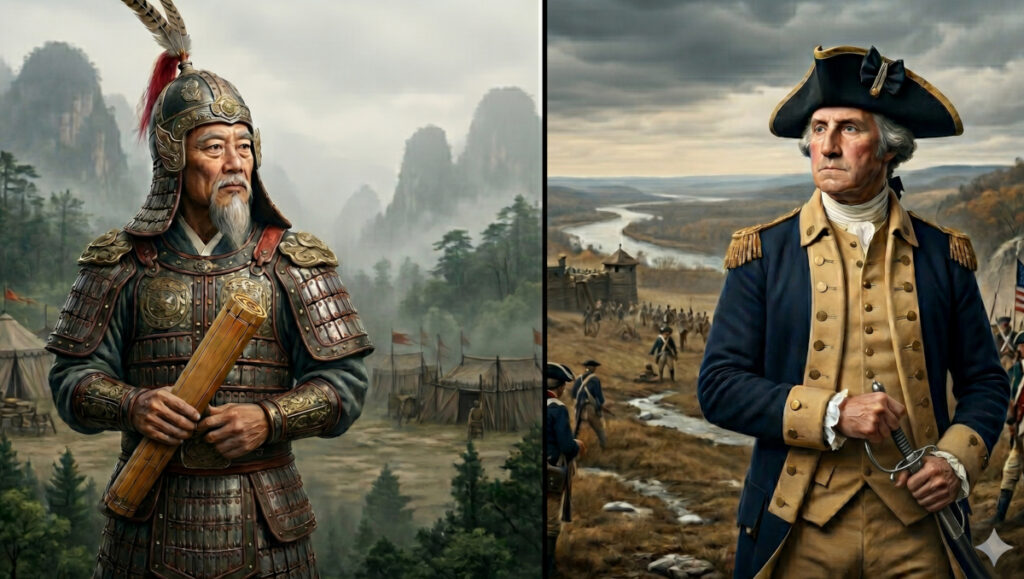
Henry Kissinger asserted that China possesses a unique, distinctive military theory. Claims like Kissinger’s often imply that the pivotal writings of Sun Tzu and Mao Tse-tung in particular have shaped a unique way of war fundamentally different from Western military traditions, a divergence most dramatically seen in a supposed Chinese preference for indirect warfare and deception. However, these seemingly unique Chinese strategic emphases were not matters of preference or tradition, but of necessity and survival, and when facing a similar challenge, Eastern and Western leaders consistently choose similar indirect strategies. The operational environment, not culture, dictates strategy, East or West.
Indirect Strategies and Force Preservation
According to Colin Gray, strategy can be expressed in seven pairings of opposing strategies with “direct or indirect” as one coupling, and if a different Chinese way of war existed, the use of indirect strategies would be a key component. A direct strategy targets an adversary’s strength. For Carl von Clausewitz, this was the center of gravity, “the hub of all power and movement, on which everything depends,” and he advocated striking at this source of strength through the entire conflict. Conversely, Sun Tzu advocated indirect strategies, avoiding an enemy’s strength and attacking him where he is least prepared or least expects action. Instead of seeking a decisive battle against the enemy force, he recommended keeping the enemy under strain and wearing him down. Mao also advocated for the indirect approach during the first two phases of a protracted war: When the enemy is on the strategic offensive in the first phase, the weaker opposing force should use mobile warfare supported by guerilla forces to exhaust and frustrate the enemy, shifting in the second phase, strategic stalemate, to widespread guerilla warfare to wear down the large opposing force and disintegrate its morale.
However, the character of the wars in which these two Chinese theorists fought drove the indirect rather than direct strategies which they employed. Clausewitz claims that a force must be able to score a decisive victory over the enemy and pursue that victory “to the point where the balance is beyond redress.” Sun Tzu, too, did not rule out decisive battle, advocating swift, decisive attacks if the situation permitted, such as when one’s forces significantly outnumbered the enemy.
In the Warring States period during which Sun Tzu most likely lived, however, states rarely enjoyed such advantages. By the mid-fifth century BC, China contained eight large states, six of which ceaselessly fought against each other while simultaneously attempting to consume dozens of small principalities. Even if a military achieved a decisive victory against one adversary, any significant losses would immediately make it vulnerable to other predatory powers. Therefore, Sun Tzu’s overall preference for an indirect approach was a function of risk aversion due to the anarchic and bellicose nature of the period.
Mao’s choice of an indirect approach was also a function of necessity rather than preference, but for a different reason: The Japanese army was far superior to Chinese forces. Mao recognized that defeating his enemy in a quick, decisive war was impossible, and that only a protracted conflict could achieve success by slowly changing the force differential between the combatants. Mao advocated, however, for ousting the enemy in a direct counter-offensive in the final phase of protracted war. which shows that the indirect approach was only a starting point for his strategy and that the outcome of the conflict would depend on “regular” warfare.
Indeed, history demonstrates that Chinese generals often chose direct strategies to seek or accept decisive battle, in particular when they faced seemingly favorable odds. The Southern Song chose to fight a naval engagement at the Battle of Yaishan in 1279 against a Mongol navy which it outnumbered ten to one. Unfortunately for the Song, superior numbers did not prevent a decisive defeat that enable Kublai Khan to become the first Mongol emperor of China. About half a millennium later during the Second Opium War, Anglo-French forces of 4,000 men defeated a Qing army of 30,000 near Beijing at the Battle of Palikao. A Chinese frontal assault on September 21st, 1860, led to heavy losses compared to the insignificant number of deaths incurred by European forces. About two centuries later, during the Chinese civil war, Mao transitioned to a decisive mobile war strategy in 1948. The Huai-Hai campaign, which allowed the Chinese Communist Party to destroy the bulk of the Nationalist forces, provides a notable example of this approach.
A Western Parallel?
Despite the West’s apparent preference for the direct approach, American and European history demonstrates that militaries often used the indirect approach for similar reasons as in Chinese history. In the second half of the eighteenth century, professional armies were expensive, and state resources were limited. Therefore, countries discouraged generals from risking forces in pitched battles. Similar to Sun Tzu’s time, various periods in Europe were characterized by power struggles between multiple states, and significant losses in one decisive battle created vulnerability in relation to other great powers. Charles the Bold’s losses at the Battle of Nancy in 1477 and the resulting end of Burgundian greatness demonstrate the significant strategic risk of fighting large, decisive battles in multipolar geopolitical environments. Charles XII faced a similarly impactful loss at the Battle of Poltava in 1709, which bolstered the anti-Swedish coalition and ended Sweden’s status as a major European power. Half a century later, Frederick the Great would suffer a similarly catastrophic defeat at the Battle of Kunersdorf, the disastrous effects of which were only mitigated by the death of Empress Elizabeth of Russia, whose successor admired Frederick and halted the war against Prussia.
As these Western examples demonstrate, the choice between a direct or indirect approach is based on risk calculation, not preference.
Like Mao, Western states also often chose an indirect approach in order to preserve their forces in the face of adversaries’ superior military strength. During the Peloponnesian War, Pericles argued that an indirect strategy against the Spartans would achieve success. Recognizing superior Spartan strength on land, he insisted that Athens refuse fighting the Spartan army even when it was ravaging Attica. About two centuries later after the disastrous battle of Lake Trasimene, the Roman legions under Quintus Fabius Maximus Verrucosus similarly avoided battle with the formidable Hannibal. Lessons from the Fabian Strategy influenced American strategy during the Revolutionary War. After fighting the British in New York, George Washington understood that the preservation of his army was a higher objective than the defense of a geographic area because the Revolutionary cause would continue to exist as long as his force did. Therefore, he often refused large battles and wore down the British over time. As these Western examples demonstrate, the choice between a direct or indirect approach is based on risk calculation, not preference.
A Smarter Way of Warfare?
In line with the indirect approach, traditional Chinese strategy seems to emphasize intelligence and deception as essential elements in warfare, while Western theory appears to demonstrate less appreciation for these force multipliers. For example, the two European titans of post-Napoleonic theory, Clausewitz and Antoine-Henri Jomini, place much less emphasis on intelligence and deception in their writings compared to Sun Tzu: Jomini claimed that although intelligence is important to military operations, getting reliable intelligence was difficult and therefore challenging to effectively incorporate into military planning. Clausewitz went further by claiming that intelligence was generally contradictory and usually false. Furthermore, despite expounding upon the “fog” of battle and its effects, he did not discuss how to take advantage of the enemy’s confusion in any depth. In addition, unlike Sun Tzu, neither European author discusses the employment of spies.
Conversely, two of Sun Tzu’s most famous quotes place tremendous significance on these topics: “All warfare is based on deception,” and “Know the enemy and know yourself; in a hundred battles you will never be in peril.” Mao also stresses the importance of deliberately creating “misconceptions” and making the enemy “blind and deaf” to achieve surprise and superiority. This emphasis in the writings of Sun Tzu and Mao on deception and intelligence is more a reflection of the kinds of wars each was fighting than some sort of preference for intrigue inherent in a “Chinese” way of war. Although intelligence plays a critical role in any war and can turn the tide of battle, choosing a direct strategy, when appropriate, ultimately favors revealing one’s main force in order to clash with another large force; an indirect approach, such as during guerilla warfare, generally requires force preservation. As the U.S. Army’s manual on combat skills explains, “If the enemy can see you and you are within range of his weapons system, he can engage and possibly kill you,” so cover and concealment are necessary for survival. If an adversary is strong enough, cover, or physical protection, is not adequate to guard a force and concealment, or masking one’s own location, is essential. Deception and intelligence can keep the enemy ignorant of its adversary’s disposition and allow that adversary to avoid contact.
Though the greats of Western theory did not emphasize deception and intelligence as much as Sun Tzu and Mao, Western militaries often used both of these critical tools to overcome powerful adversaries of equal or greater strength. Intelligence and deception were vital to George Washington, who created a network of spies to keep him abreast of British positions and actions, allowing him to guard against surprise while simultaneously conducting raids to reduce enemy strength. In preparation for D-Day, the Allies executed Operation Fortitude to deceive the Nazis as to the location of the decisive invasion, including using double agents and creating a fake army. Over a millennium before the Allied invasion of France, King Alfred of Wessex purportedly disguised himself as a minstrel in order to gain access to the camp of the Danish chieftain Guthrum, using intelligence gained from this covert activity to win the decisive Battle of Edington in 878.
Context Is Essential
A broad analysis of indirect strategy, intelligence, and deception—elements often cited as keys to the “Chinese way of war”—demonstrates that military leaders consistently apply common strategies when faced with common dilemmas, and that the operational environment dictates military strategies more than by tradition or cultural preference. Sun Tzu and Mao, although separated by more than 2,000 years, crafted strategies for similar environments in which force preservation was essential; these two Chinese greats employed indirect, creative strategies to manage risk and avoid catastrophic defeat against superior adversaries.
Faced with the potential for conflict with the armed forces of the Chinese Communist Party, U.S. strategists must move past assumptions regarding cultural preferences for warmaking. Instead, planning must focus rigorously on the operational environment and the relative power differential between the two nations. Although the United States currently maintains military advantages over China in key areas like force projection, strategists must understand that if the power differential shifts over time, Chinese strategy will also shift. Ultimately, theory is only an initial starting point for operational planning: the realities of the modern battlefield and the geostrategic environment will shape strategic choices, Chinese and U.S., far more than the dicta of Sun Tzu or Clausewitz.
Loris Lepri is a lieutenant colonel and an Army Strategist with 17 years of active-duty military service and a faculty member of the U.S. Army War College Distance Education Program.
The views expressed in this article are those of the author and do not necessarily reflect those of the U.S. Army War College, the U.S. Army, or the Department of War.
Photo Credit: Created by Gemini