


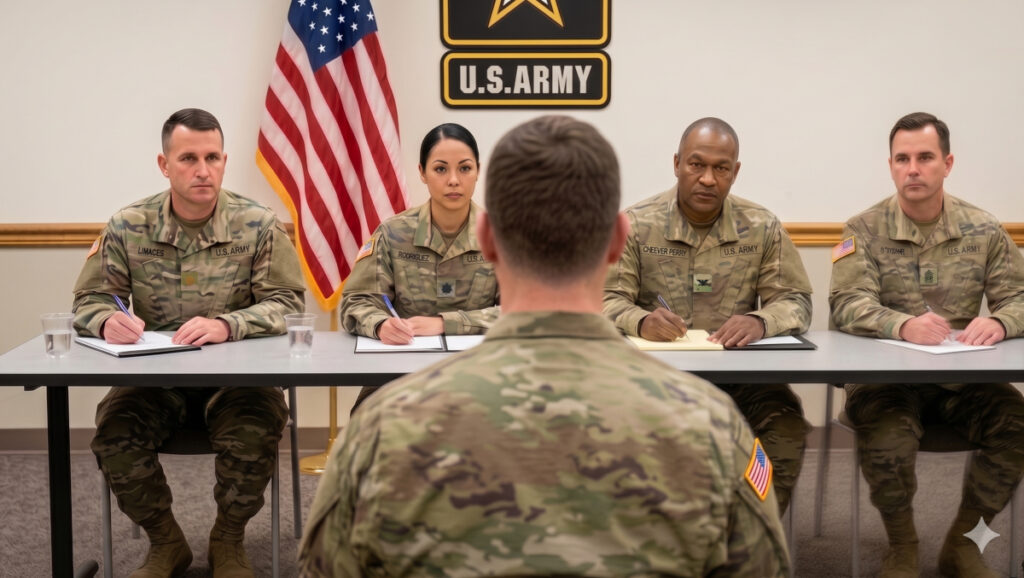
One of the senior leaders finally interrupted. He did not raise his voice or insult me. He simply said what everyone else had already seen.
It took twelve years, five months, and four hours for someone to finally tell me I was not the smartest person in the room.
I walked into the interview convinced I knew what they wanted to see and determined to be that person. I was controlled, precise, and impressive. I answered questions with rehearsed confidence, speaking just enough to sound authoritative but not enough to expose uncertainty. I was not lying, but I was not being honest either. I was performing.
Halfway through, I felt the temperature change. Heads stopped nodding. Pens stopped moving. The room grew quiet in a way that had nothing to do with respect. I mistook it for seriousness. In reality, it was distance.
One of the senior leaders finally interrupted. He did not raise his voice or insult me. He simply said what everyone else had already seen.
“This does not feel genuine,” he said. “You are trying to be someone you think we want, and it is getting in the way of who you actually are.”
I was exposed, not because I lacked competence, but because I lacked self-awareness. In a room full of leaders who valued trust, accountability, and teamwork over individual performance, I had presented myself as cold, insincere, and transactional. I had confused confidence with leadership and composure with credibility.
My former boss chaired the interview and walking in I assumed the job was already secured. The same man who once wrote that I was “the best staff officer I have worked with in seventeen years of service” watched as everything I believed about myself collapsed. My evaluations were strong. My reputation was solid. And yet, on that October afternoon, I realized how long I had gone without truly understanding leadership.
I had entered the room to earn a job. I left with the most accurate feedback of my career.
This is a story about an army officer’s failure. The lesson inside it belongs to the institution. Only an experience like this could expose and correct leadership flaws that had been quietly reinforced over time. I hope this story can serve as both a warning and an encouragement, not just for individuals, but for an army culture that sometimes mistakes performance for awareness. Only by identifying our deficiencies can we begin to correct them.
“It’s not about me.”
A revered first sergeant once explained that simple truth to me early in my career. The lesson did not sink in then. I understand it now.
The idea feels counterintuitive, given what military officers perceive as the hypercompetitive environment of business. In military settings, surrendering individual success in pursuit of collective outcomes somehow produces less stress, less anxiety, and greater satisfaction. Part of it may be accepting that many of the paths available in youth are now closed. Part of it may be a deeper appreciation for the magnitude of threats facing our society and our institutions. Defending them requires everyone to row in the same direction. Ego and selfishness are inefficient. They undermine the collective effort.
I now believe this is true. Experience has a tendency to shape perspective. Maybe it is my position as an organizational leader. Maybe it is exposure to strategic-level decision-making. Maybe it is personal growth and maturity as a father of three. Whatever the combination, I have found fulfillment by letting go of personal ambition.
So, why did I fail that interview?
I cannot win on my own. The journey is also more meaningful when shared with a team.
The cliché holds true. The sum of the parts is greater than the individual pieces. The strong horse may get worked harder, but every horse is still required to pull the load.
So, why did I fail that interview? For starters, a lack of self-awareness. My arrogance in assuming I already had the job also didn’t help. My performative approach mocked the sincerity they were looking for. I didn’t have to be perfect, I just needed to be real. I thought they needed me rather than interviewing to join their team.
That realization drew me toward a no-fail organization. One entrusted with the most demanding missions because failure is not an option. When other elite forces are in trouble, they call for that team. When members of that team are in a tight spot, they rely on each other.
I did not fully understand why I wanted to be there. I was arrogant enough to think they needed me. My physical ability and past performance were my entry ticket for the interview. Humility and a demonstrated willingness to place the collective above self were necessary for future success. So how can one avoid repeating my mistake? It might start with a simple question you should ask when preparing for that interview.
What is your why?
How often do you reflect on the reason you serve? Adventure, pay, lifestyle, benefits, education, escape, advancement, and countless other motivations drive men and women to join or reenlist. None of them are wrong. Most are rational. The question is not meant to judge. It is meant to build self-awareness.
Your why shapes how you lead and how you contribute.
Think about the best person you know. Why do you enjoy being around them? What qualities make you want to be part of their team? Competence matters, but it is rarely the most important trait. On that October day, I realized I wanted to be part of a team that valued accountability and self-awareness. A team that demanded hard, honest conversations. A team that understood improvement begins with seeing yourself clearly.
Membership requires physical capability and mental toughness. More importantly, it requires a team-first mindset and the humility to understand that it is never about you.
If this story makes you uncomfortable, it should. I was not failing because I was unprepared, unintelligent, or unmotivated. I failed because the army rewarded my performance for years without forcing me to examine myself. That failure is not unique, and it is not harmless. If you want to be a better leader, do not wait for a public correction to humble you. Ask who you become under pressure. Ask whether people tell you the truth or simply tell you what you want to hear. Ask whether you lead to be seen or lead so the team can succeed without you. Then do something harder than working longer hours or chasing another qualification. Invite honest feedback. Listen without defending yourself. Change. The army does not need more impressive individuals. It needs leaders with the humility to see themselves clearly and the discipline to put the team ahead of their own reflection.
George J. Fust is a U.S. Army lieutenant colonel in the U.S. Indo-Pacific Command area of responsibility, where he is the G2 Director of targeting and collection and advisor to senior leaders within U.S. Army Pacific. He is a graduate of Duke University and an adjunct professor. He previously taught in the Department of Social Sciences at the U.S. Military Academy and served in the 75th Ranger Regiment. He has multiple deployments and experience in Europe, Africa, and Asia.
The views expressed in this article are those of the author and do not necessarily reflect those of the U.S. Army War College, the U.S. Army, or the Department of War.
Photo Credit: Created by Gemini